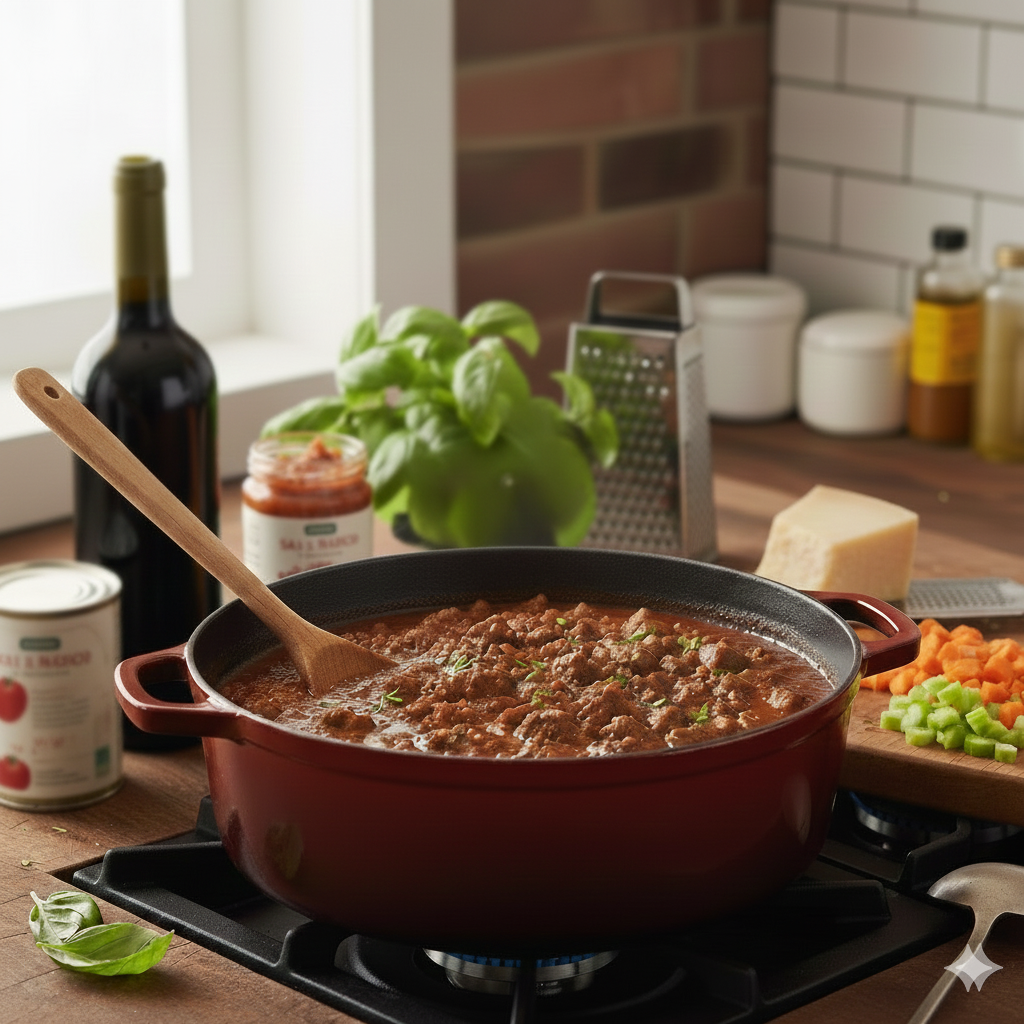
A simmer-first sauce spotlight exploring why slow–crafted ragu delivers deeper aroma, richer color, and a smooth, cling-thick pasta experience without watery layers.
🍝 Fork-First Sauce Harmony
Some pasta sauces shout for attention with heavy seasoning or quick tricks, but slow ragu has a different personality — it earns love through aroma depth, color richness, and noodle–coating confidence. Ragu is held in high regard because the sauce becomes complete before it ever touches the pasta, allowing every noodle strand to be coated evenly instead of sitting on top of thin liquids or overwhelming spice.
The real beauty of ragu is its patience. The ingredients warm, brown, reduce, and reunite gently, giving the sauce a richer aroma and a smoother feel when wrapped on a fork. When garlic or tomato paste is scorched on high heat, it forms bitter clusters, sharp edges, or harsh burnt notes that interrupt the sauce’s aroma foundation. Ragu avoids this because it’s built on gentle heat, steady liquids, and gradual cheese folding, making it a familiar kitchen rhythm that stays predictable across many palates.
Instead of relying on long backgrounds or dramatic ingredient noise, ragu lets quality develop quietly. Its consistency, aroma, and rich tomato color naturally signal a comforting meal experience that people can quickly understand and be confident recreating.
🧠 Why the Reduction Order Works
The reduction sequence ragu follows is important because each stage supports sauce behavior:
- Butter or oil warms first → allows garlic and herbs to soften without burning
- Protein browns second → beef or turkey gently caramelizes, embedding aroma into fat molecules
- Tomato paste or purée warms third → deepens red color into burgundy tones while mellowing acids
- Liquids simmer last into slight thickness → milk or tomatoes reduce into a sauce-hugging glaze before cheese joins
- Cheese is folded in slowly at the end → binds into the thickened liquid instead of clumping into foam
This means the noodle receives a sauce that already knows its identity: thick-coating, glossy, aromatic, and cohesive.
🔥 Why Pasta Lovers Enjoy Ragu More Than Other Sauces
Pasta lovers consistently enjoy ragu for 3 reasons:
- It carries aroma well instead of tasting scorched, metallic, or bitter
- It coats noodles beautifully without watery pooling under them
- It tastes familiar and balanced without spice shock dominating any bite
Ragu creates what many pasta lovers really want:
✅ fully coated ribbons, tubes, or spirals
✅ cheese crowns that melt glossy, not clumpy
✅ rich tomato or cream–tomato harmony
✅ predictable texture no matter the protein
✅ and a dinner feel that satisfies without mystery
At restaurants worldwide, ragu-style reductions are common because they look premium, smell incredible, and coat broad or ridged pasta shapes like finishing glaze silk instead of foam.
🧈 Fat, Herbs & Noodle Friendship
A good ragu foundation often starts by melting butter or oil slowly, warming garlic and herbs gently without letting them scorch. Herbs like dried Oregano or dried Basil quietly bloom fragrance that complements the fat stage first, before liquid reduction begins second. This gives the sauce a warm, familiar aroma that pasta lovers instantly recognize but doesn’t overpower or intrude into bitterness.
Noodles such as broad pappardelle or sauce-grip shapes like Rotini or Rigatoni embrace ragu best because the sauce has already reached slight thickness and cohesion when pasta folds in last.
🥩 Protein Swaps That Still Work For Ragu
Although traditions often pair ragu with beef, many households enjoy swapping it with chicken, cod, turkey, shrimp, mushrooms or cod. What matters most is browning the protein in the pot or pan first before liquids are simmered. This ensures:
- the aroma embeds into the butter/oil foundation
- the sauce reduces thicker around the noodle later
- the proteins stay intact, browned, and comforting
- and the sauce still tastes rich and predictable without foam underneath
Proteins like turkey or mushrooms brown early and fold late, preserving bite confidence and sauce harmony.
🥣 Ragu Color, Aroma & Thickness Identity
Ragu delivers bold red depth when tomato paste is browned into warm fat before liquids join. Starch encourages sauce adhesion when pasta water splashes in at early reduction, helping the pan tighten around the noodles instead of pooling underneath.
Unlike broth-heavy pasta sauces that sit thin under layers, ragu remains creamy-red, glossy and thick-coated when respected through gentle heat.
❄ Storage & Reheat Habits for Ragu Sauce
Cool ragu completely before sealing. Store airtight for best structure:
- fridge: 3 days
- freeze: 6–7 weeks
Reheat low to medium. If the sauce feels very thick after chilling, splash a spoon of reserved pasta water to reglaze, not thin it.
❓ FAQs Saucing Questions
Q: Which liquids reduce best for ragu?
A: Tomatoes, milk, and cream tighten best under low or medium heat because they reunite smoothly around fat and starch instead of foaming into broth pools under noodles.
Q: Can ragu be rearranged into a bake later?
A: Yes. Short oven time is enough because the sauce is already reduced and cohesive before it meets heat.
Q: What if the sauce looks separated underneath?
A: This often happens when cheese was added before liquids tightened. When the sauce is reduced first and cheese folded last, it stabilizes smoothly.
Q: Do dried herbs overpower ragu?
A: Not when they’re bloomed in butter or oil first and simmered low.
Want More Cozy Dinner Ideas?
If you loved this recipe, you’ll love my free Comfort Dinner Guide—packed with easy, satisfying weeknight meals.