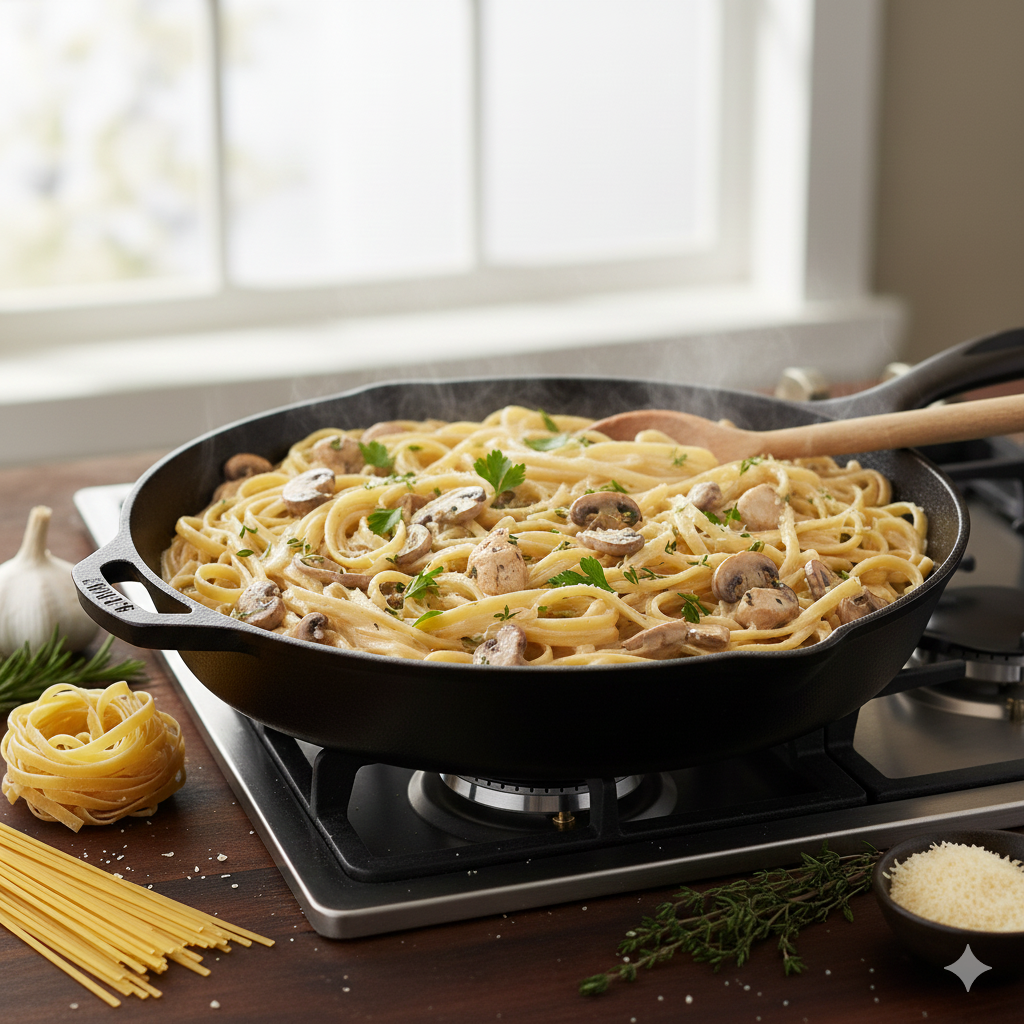
Skillet Pasta Bases That Deliver Without Overthinking The Process
A sauce-first, skillet pasta spotlight exploring why certain ingredients create smoother, thicker, aroma-rich pasta dinners that taste bold but never brothy, bitter, or confusing.
🍝 Pasta Sauce Warm-Build Stages That Matter Most
Pasta dinners often rise in popularity because of predictable sauce behavior and effortless fork-coating texture, not long storytelling or confusing build-ups. One-pan pasta is viewed as dependable because the ingredients meet heat in a natural order that protects aroma, cling texture, and seasoning balance.
The resting sauce base in a pasta skillet pan follows this rhythm:
- butter melts into the pan in a smooth swirl, warming proteins without burning
- garlic, onion, basil and other aromatics soften early for a mellow, inviting aroma
- tomatoes or paste join the pan oils second and warm gently, deepening color
- liquids like milk or cream are added after oils and aromatics have already embedded fragrance
- sauces reduce into slight thickness over low or medium simmer before cheese melts in last
This order ensures the dish stays sauce-forward without:
❌ broth pooling under noodles
❌ garlic bitterness from scorching too harshly
❌ or cheese clumping into awkward pockets
Why These Stages Matter for Comfort
The sequence a sauce meets heat matters more than the name or cook searching. It determines whether a pasta dish looks cohesive or broken, tastes aromatic or bitter, and holds flavor confidently or gets watery underneath the noodle crown. Reducing liquids longer before cheese melts in allows cheese emulsification to bind into the already-thickened base instead of fizzing into foam pools underneath. Browning protein first gives the pan oils instant fragrance, which strengthens the sauce’s ability to cling during reduction.
This gives Farfalle or Penne dinners a balanced coating that feels richer on the fork, not like soup under it.
🧈 Kitchen Staples Often Enjoyed in These Sauce Clusters
Pantry oils and some pasta appear often in pasta meals because they are durable, familiar, and consistently used at dinner level. They pair especially well with reduced creamy or tomato-cream glaze bases because their texture carries on the noodle instead of slipping under it.
Texture & Aroma Wins That Pasta Lovers Enjoy Most
One-pan pasta delivers:
✅ sauce reduced to slight thickness
✅ cheese folded gently into warm, reduced glaze, not foam broths
✅ noodles that stay smooth-coated instead of broth-pooled underneath
✅ familiar seasoning that blooms without bitter burning
✅ and satisfying bite structure everyone can imagine enjoying
Noodle-Wrap Biters Pasta Dinner Clusters Resurface Because
- sauce builds are reliable because liquids reduce around, not under noodles
- wide ribbons or ridged shapes hold glaze smoother
- cheese melt behavior looks glossy when sauce already tightened
- weeknight skillet dinners photo bold when garnish minimal
This helps put dinners like butter garlic penne, salmon Rosa linguine, or chicken carbonara strands in repeat-rotation without broth wash or cheese clumps.
❄ Storage & Reheat
Let skillet pasta cool completely before sealing airtight.
✅ Fridge: 3 days
✅ Freeze: 5–6 weeks
Reheat: Low to medium and gentle, refresh glaze lightly only if needed.
❓ FAQs
Why does the one-pan pasta method work for so many comfort dinners?
A: Because sauces reduce around the noodles instead of forming broth pools underneath them, giving every strand a balanced coating.
Can a one-pan pasta dish ever taste bitter or sharp?
A: Only when garlic, onions, or tomato paste are introduced at very high heat without stirring, forming scorched pockets that interfere with a sauce’s aroma identity. Medium to low heat protects the scent foundations and prevents harsh bitterness.
Why does cheese sometimes clump or look separated?
A: Cheese melts smoothly only when it joins the pan after liquids have already simmered into slight thickness. If cheese is folded in too fast or added to thin liquids too early, the residual steam creates cheese clumps instead of cheese shine.
Do skillet pasta meals reheat creamy or glossy?
A: They do best when reheated low and gentle. A very small splash of starchy pasta water or broth used early at the reduction stage can restore gloss if needed, but too much broth gives sauces a soup personality, which many pasta lovers avoid.
Which pasta shapes work best with one-pan reduced sauces?
A: Wide ribbons and sauce-gripping shapes like pappardelle, tagliatelle, penne, rigatoni, ziti, rotini or farfalle hold the sauce more confidently when the liquid reduction order is respected.
Want More Cozy Dinner Ideas?
If you loved this recipe, you’ll love my free Comfort Dinner Guide—packed with easy, satisfying weeknight meals.