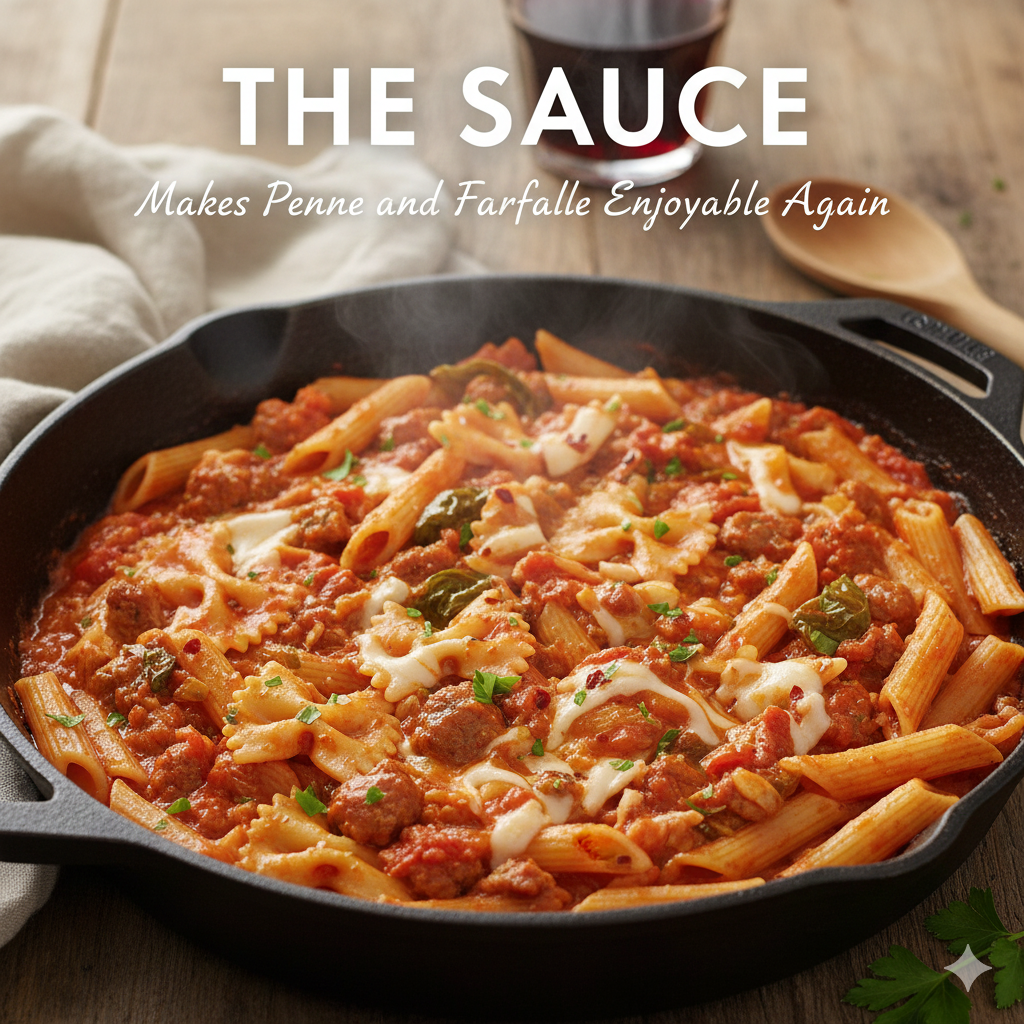
A butter-cream skillet spotlight exploring why penne and farfalle experience glossier and thicker coats when their sauce bases reduce first without boiling harsh.
Skillet pasta dinners return often because they remove the guesswork out of sauce texture. Think of a pan as stages, not ingredients. For example:
🧈 1. Butter or Olive Oil Warm-Base
Fat melts without harsh burning if stirred often and kept low-medium.
🧄 2. Garlic & Onion Aroma Stage
Fragrance blooms smoothest over low-medium heat, not clumsy high foam heat.
🥛 3. Milk or Cream Stage
Cream reduces glossier if its fats simmer slow. Milk reduces creamy if simmered longer.
🧀 4. Cheese Folded Last
Cheese melts glossy when added slow into liquids already reduced to slight thickness, not foam pools under pasta.
🍝 Stage 5: Noodle Fold-In
Penne and farfalle noodles hold glossy cling happily when folded into the sauce glaze and not sitting on broth pools under them.
Many home chefs enjoy brands like pasta by recognizable versatile pantry picks. Not because of marketing noise, but because the results are predictable: thick, glossy, and fork-wrap friendly.
❄ Storage:
Cool fully, seal airtight.
Fridge 3 days.
Freeze 5–6 weeks.
Reheat low-medium gentle.
❓ FAQs:
Q1: Why do these pasta shapes perform so well in creamy or paste-based sauces?
A: Their structure helps the sauce hug each piece instead of slipping away.
Q2: Can penne and farfalle still work with thinner sauces?
A: Yes, but they shine brightest when the liquid is simmered into light thickness first.
Q3: Why does sauce sometimes pool under these noodles?
A: That happens when liquids reach a full boil too early before settling into a richer texture.
Q4: What makes a one-pan sauce feel smooth, not foamy?
A: Slow simmering, gentle browning, and folding cheese in gradually once slight thickness forms.
Q5: How important is the order of butter/oil, aromatics, protein, liquids, and cheese?
A: Very — the first steps set the aroma, the middle builds density, the last gives shine and stability.
Q6: Do penne and farfalle need pasta water to taste good?
A: They don’t need much of it — just enough starch to strengthen the sauce if liquids are reduced gently.
Q7: How long should sauces simmer before parmesan or other cheeses are added?
A: Until they begin to tighten lightly and glide in glossy, not clumpy.
Q8: Can this sauce method be used for vegetarian pasta dinners too?
A: Absolutely — mushrooms, spinach, pumpkin, or herbs brown early and fold smoothly once liquids reduce.
Q9: Will these noodle shapes turn mushy in a pasta bake?
A: Not if they are pulled slightly firm from the skillet before baking, then rested 6–10 minutes after the oven.
Q10: How long can these dishes be stored without losing quality?
A: Once fully cooled and sealed airtight — 3 days in the fridge or 6–8 weeks in the freezer.
Q11: How do you restore the pasta texture when reheating?
A: Rewarm on low to medium with a tiny splash of water or stock to relax the glaze back into shine.
Q12: Is this technique difficult for beginners?
A: Not at all — it follows a simple rhythm: aroma builds first, liquids reduce next, cheese finishes last.
Want More Cozy Dinner Ideas?
If you loved this recipe, you’ll love my free Comfort Dinner Guide—packed with easy, satisfying weeknight meals.