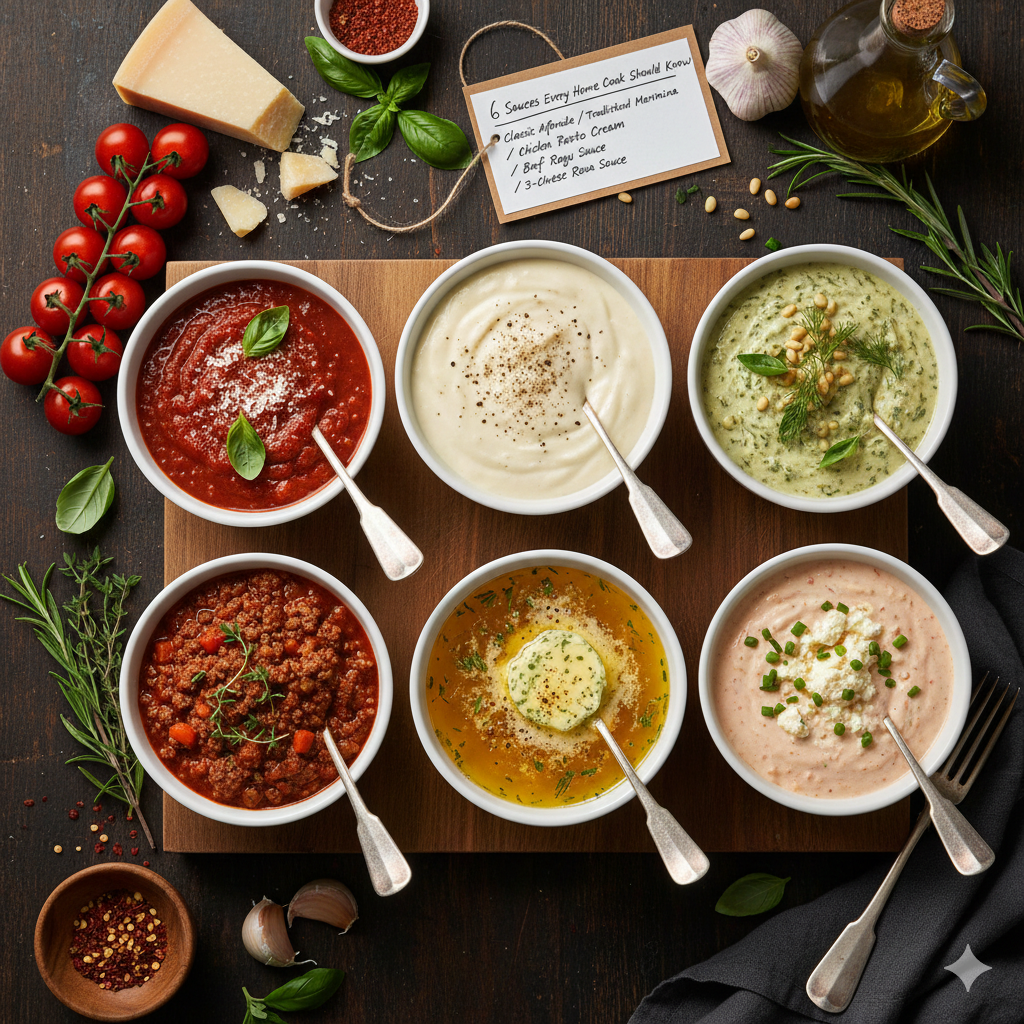
A sauce-forward, skim-friendly pasta guide exploring six iconic sauces, how they behave, and how to use them with confidence for flavorful, thick-coated noodle dinners at home. Here are 6 sauces that everyday cooks use to make great tasting dishes.
🧈 1. Classic Alfredo
Style profile: creamy white butter-parmesan pasta
Texture identity: smooth, glossy, thick-coating (never soup-like)
Alfredo might seem simple, but its simplicity is precisely why it stays powerful in search and repeat cooking. It was popularized by Italian-American kitchens and remains deeply loved by readers around the world because it has only a few ingredients and an easy sense of familiarity. The secret to Alfredo’s appeal is that it delivers richness without spice-shock — it tastes predictable, comforting, and luxurious at the same time.
The chemistry behind this sauce involves:
- melting fat (butter + oil optional)
- adding aromatics carefully (garlic, onion, herbs)
- introducing dairy only once the fat base is swirled smooth
- and folding Parmesan in gradually for shine + cling.
Most importantly: no cream should hit the pan on high heat. Low-medium simmer matters more than the amount of dairy used. When you respect the order and timing, you create a sauce that:
✅ coats noodles evenly
✅ avoids water-pooling
✅ stores beautifully without separation
✅ and reheats smooth
🍅 2. Traditional Tomato Marinara
Style profile: crushed-tomato garlic sauce
Flavor: tangy, herbaceous, aromatic
Texture: simmered to a slightly thickened glaze
Tomato marinara is the most universal pasta base — durable, dependable. A vibrant, inviting red hue that signals comfort, and freshness.
- warm red color
- predictable flavor profile (garlic + oregano + basil)
- and versatility for stretching content ideas.
Marinara is a 15–25 minute simmer sauce that becomes richer in aroma than flavor noise if you let the garlic infuse the butter or oil before adding tomatoes.
Perfect marinara always:
- starts with oil → warms the garlic and dried herbs
- the tomato simmers low so the acid balances instead of splashing
- pasta water or broth can assist thickening early, never after cheese
🍖 3. Ragu Sauce
Style profile: meaty slow tomato sauce
Flavor: rich, earthy, savory
Texture: deeply reduced, not soupy
Ragu stands as one of the most reliable and timeless pasta sauces because it’s built on deep aroma and thick, glossy texture. With a foundation of browned tomato paste, butter, and savory beef, the sauce reduces into a rich coating that clings beautifully to noodles without looking watery or broth-heavy.
Its bold red color and slow-simmered depth make it a favorite for those who love hearty, comforting pasta dinners that feel luxurious but balanced. The key elements — butter, oregano, basil, and gently browned beef — create a familiar, trusted flavor profile many readers recognize, save, and return to again and again.
Because ragu delivers the perfect sauce-to-noodle harmony, it remains a standout choice for sauce-forward pasta inspiration and repeat-cooking favorites for many home cook dinners.
Protein swaps like turkey or mushrooms still work perfectly when browned first and folded in last, preserving the cling-specific texture pasta lovers crave. Ragu’s durability comes not from trends, but from technique — the sauce is thickened early, cheese joined slowly, and liquids reduced low and gradual, ensuring it coats noodles confidently, not soups them.
A splash of pasta water or broth added early thins paste gently to even color, but avoids watery layering entirely. This allows the pan to carry thick and shiny sauce results that reheat smoothly, and save time.
🥣 4. Chicken Pesto Cream
Style profile: creamy basil pesto green sauce
Flavor identity: italian-forward aroma, not spice-forward intrusion
Texture: glossy green or green creamy (early-reduced before cheese)
This dish continues to ranked high in home-dinners because of its creamy pesto blends deliver which home cooks love: vibrant color and recognizable aroma. The combination of silky dairy with pesto creates a glossy green coating that looks rich and appetizing — a major reason it is found in many pantries. Unlike broth-heavy sauces, creamy pesto offers more surface adhesion, meaning the sauce hugs each noodle instead of pooling under it.
Aromatics like garlic softened in butter first help build a restaurant-style smell without dominating the flavor. Liquids are always reduced to a cling-thick glaze before cheese, which protects the sauce’s creamy identity. Once the sauce sits warm and tightened, Parmesan is folded in slowly, creating a smooth, shiny melt that binds instead of clumping. Cooks tend to prepare dishes using this sauce because it feels luxurious while remaining balanced, familiar, and dependable for weeknight cooking — creamy, glossy, and confidently coated, never soupy.
🧀 5. 3-Cheese Rosa
Style profile: tomato-cream pink fusion sauce
Flavor: tangy + creamy, reader-very saveable
Texture: glossy, cheese-bound and rich
Rosa sauces are a dinner inspiration for staples because of their bold, creamy-pink color which stands out in pasta feed and save-style boards. The fusion of tomato and cream creates a balanced coating that feels rich without tasting heavy, sharp, or overly seasoned.
Unlike broth-style sauces that pool, Rosa sauces reduce into a thicker, cling-friendly glaze that wraps long, spiral, or tube pastas beautifully. Ingredients like butter-softened garlic and dried oregano bloom early to build a gentle, restaurant-style aroma without overpowering the sauce’s identity. Cheese, most often Parmesan, melts smoothest when stirred in slowly after the liquids have already tightened — keeping the sauce glossy and cohesive, not soupy or clumpy.
🌿 6. Herb Butter Gloss Sauce
Style profile: butter-infused noodles
Flavor identity: earthy, aromatic hints
Texture: shiny butter glaze (reduced with water early, not later)
Buttery sauces shine brightest in photos when the noodles and sauce texture are clearly visible.
A gentle buttery or creamy gloss that clings to the noodles looks more appetizing and relatable, making it easier for pasta lovers to prepare the dish often at home.
The thin, natural coating highlights the pasta shape — whether ribbon, spiral, or tube — making every bite look flavorful and balanced.
Butter-based sauces stand out because they reduce into a smooth glaze without pooling or looking watery underneath the noodles.
A light sprinkle of basil or parsley can enhance the visual warmth, but clean composition and visible sauce cling always win more saves.
❄ Storage Advice
- Alfredo + Rosa + butter-cream sauces can be refrigerated 2–3 days sealed
- Slow ragu and Rosa fusion can be cooled fully then frozen 6–8 weeks
- Reheat low always
- Add pasta water splash to restore shine if needed
❓Reader FAQs
Q: Can Alfredo sauces be “dairy light”?
A: Yes — swap heavy cream with milk, but reduce longer before cheese for cling texture.
Q: Can you bake Alfredo after coating?
A: Yes, but keep oven time short (10 minutes at 375℉) because sauce is already thick.
Q: How do I avoid “soup feel”?
A: Reduce liquids longer before cheese and avoid high heat. Simmer the cream, milk, or tomatoes for a few extra minutes until the sauce thickens naturally before adding the cheese. If cheese is added too early, while the liquid is still thin, the sauce can stay watery underneath, making it look like soup.
Q: Which sauce is best for beginners?
A: Alfredo, marinara, butter gloss and Rosa fusion because they are familiar and easy to repeat.
Want More Cozy Dinner Ideas?
If you loved this recipe, you’ll love my free Comfort Dinner Guide—packed with easy, satisfying weeknight meals.