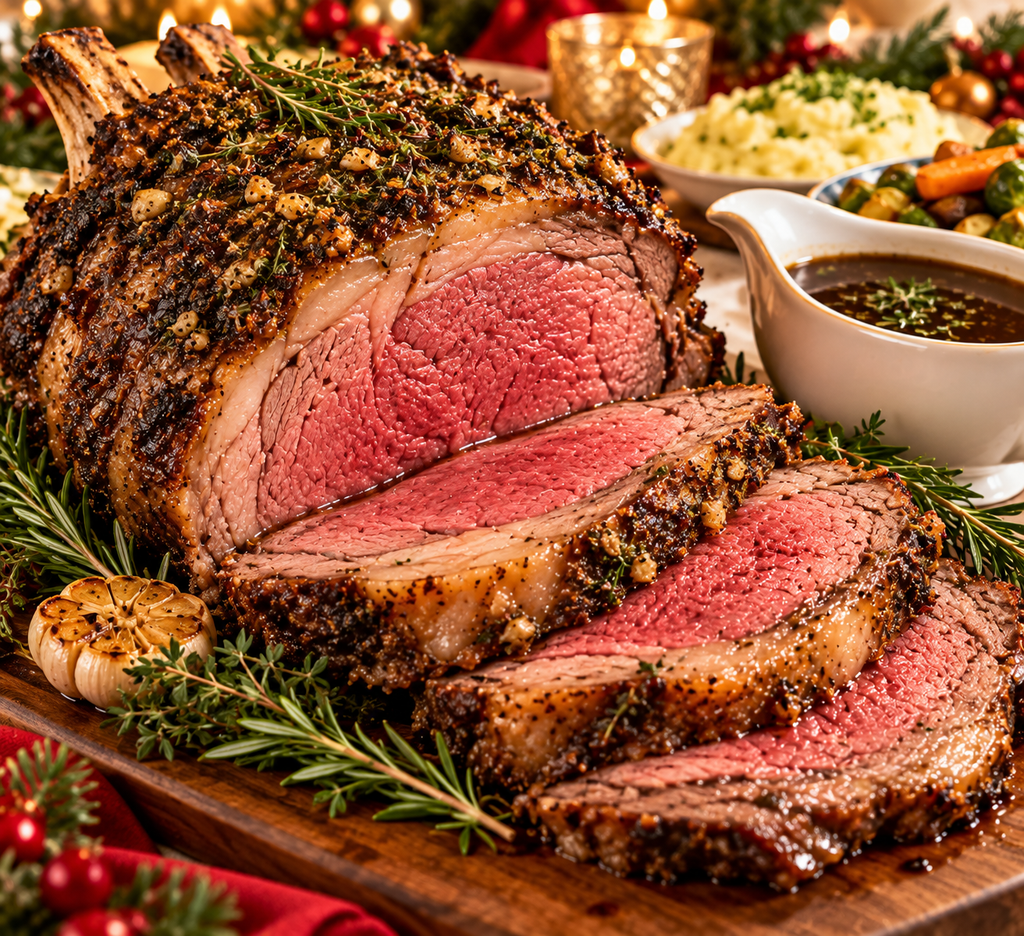
Tender, juicy and beautifully crusted with garlic, rosemary and thyme, this Garlic Herb Prime Rib makes an impressive centerpiece for Christmas dinner or any special holiday gathering. Slow roasting keeps the beef succulent and evenly cooked, while a simple homemade au jus made from the flavorful pan drippings finishes every slice beautifully.
Ingredients
Method
- Remove the prime rib from the refrigerator about 1 hour before roasting. Pat thoroughly dry with paper towels.
- Preheat the oven to 450°F. Place the roast bone-side down in a roasting pan fitted with a rack.
- Combine the olive oil, garlic, rosemary, thyme, kosher salt, black pepper, onion powder and softened butter until evenly blended.
- Rub the garlic herb mixture generously over the top and sides of the roast, pressing it onto the surface so it adheres.
- Roast at 450°F for 20 minutes to begin developing a deeply browned exterior.
- Reduce the oven temperature to 325°F and continue roasting until the center reaches your preferred doneness. Begin checking the internal temperature early rather than relying solely on cooking time.
- Transfer the prime rib to a cutting board and loosely tent with foil. Rest for 30 minutes before carving. The internal temperature will continue to rise as the roast rests.
- Carefully skim excess fat from the roasting pan, leaving the flavorful browned drippings. Place the pan over medium heat if stovetop-safe, or transfer the drippings to a saucepan. Add the beef broth, wine or additional broth, Worcestershire sauce and rosemary.
- Scrape up the browned bits and simmer for 8–10 minutes, until flavorful and slightly reduced. Remove the rosemary and season with salt and pepper as needed.
- Remove the bones if desired, slice the prime rib across the grain and serve warm with the au jus alongside.
Enjoying this recipe? Discover more from FlavourQuest. Start with our Comfort Dinner Guide — a collection of easy, cozy meal ideas created to make busy weeknight dinners simpler and more delicious. And stay tuned — more FlavourQuest recipe collections and cookbooks are on the way!
🔄 Variations
🌿 Garlic Herb Crust: Add chopped fresh parsley and a little sage to the rosemary and thyme.
🥩 Boneless Prime Rib: Use a boneless rib roast and begin checking the internal temperature earlier because it may cook more quickly.
🧄 Roasted Garlic Prime Rib: Replace the fresh minced garlic with mashed roasted garlic for a sweeter, mellower garlic flavor.
🍷 Red Wine Au Jus: Use the dry red wine option for a deeper, richer sauce.
🍽️ Serving Suggestions
🥔 Creamy Homestyle Mashed Potatoes: Perfect for soaking up the savory au jus.
🥬 Modern Green Bean Almondine: Adds freshness and crunch alongside the rich beef.
🥕 Herb-Roasted Holiday Vegetables: Creates a colorful and elegant Christmas dinner plate.
🥖 Soft Honey Butter Dinner Rolls: Serve warm for a complete holiday feast.
🧊 Storage
Store leftover prime rib in an airtight container in the refrigerator for up to 3–4 days. Keep the au jus in a separate covered container.
Reheat slices gently with a small amount of au jus in a covered skillet or baking dish to help prevent the beef from drying out.
Freeze tightly wrapped leftover prime rib for up to 2 months. Thaw overnight in the refrigerator before reheating.
💡 Pro Tips
Use a meat thermometer. Prime rib is an expensive cut, so internal temperature is much more reliable than cooking time.
Remove it before it reaches the final temperature. The roast continues cooking while it rests, so account for carryover cooking.
Don’t skip the rest. Resting for about 30 minutes helps the juices redistribute before carving.
Save those drippings. The browned bits in the roasting pan provide much of the flavor for the au jus.
Slice only what you need. Unsliced leftover prime rib retains moisture better than meat that has already been sliced.
❓ FAQs
What internal temperature should I use for prime rib?
For food-safety guidance, USDA recommends cooking beef roasts to a minimum internal temperature of 145°F followed by at least a 3-minute rest. Some traditional prime-rib preparations use lower temperatures for different degrees of doneness; choose the preparation appropriate for your household and use a reliable food thermometer.
Can I season the prime rib ahead of time?
Yes. You can season the roast and refrigerate it uncovered overnight. This can help season the meat and dry the exterior for better browning.
Do I need a bone-in roast?
No. A boneless rib roast works as well, although cooking time may differ.
Can I make the au jus without wine?
Absolutely. Replace the wine with an equal amount of additional beef broth.
How much prime rib should I plan per person?
For a bone-in roast served as the main course with several holiday sides, approximately ½–¾ pound per person is a useful planning range.