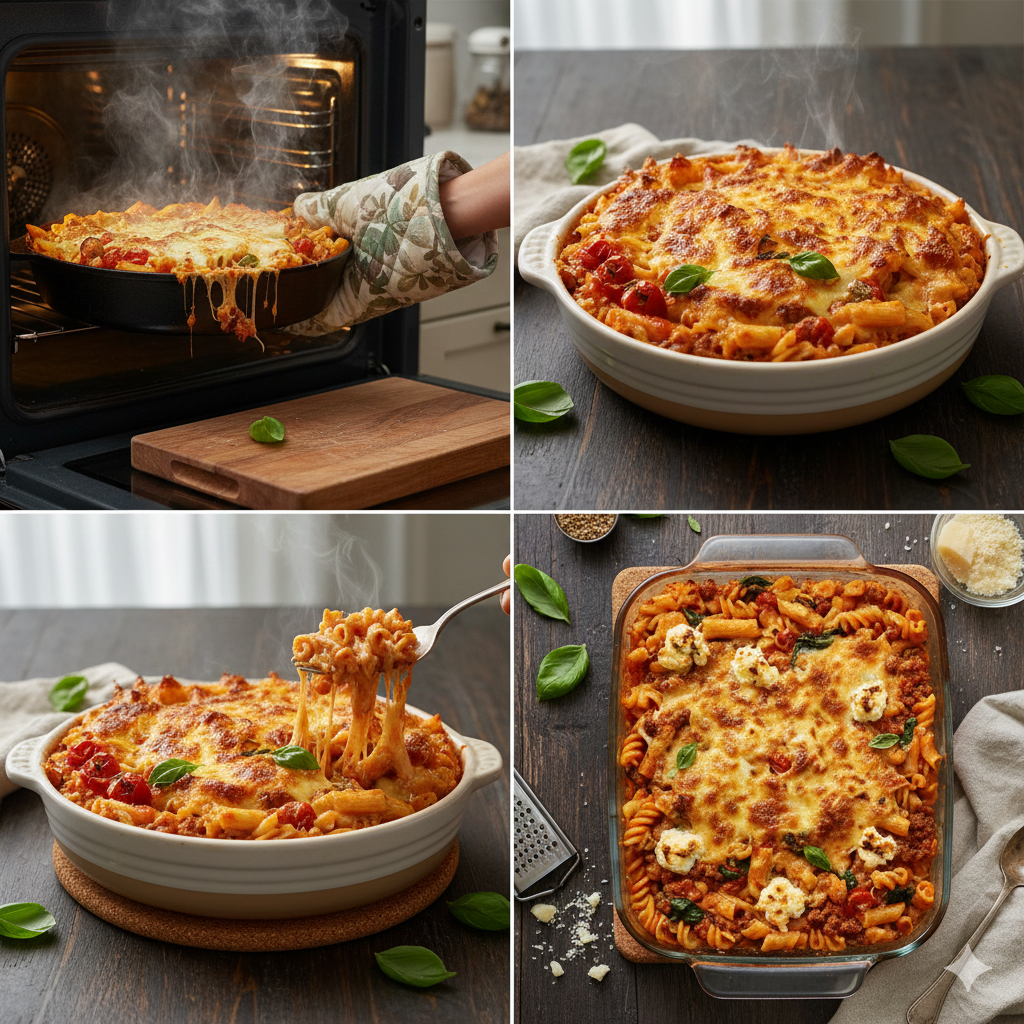
A texture-timing pasta authority piece explaining why letting pasta bakes rest improves sauce cling, aroma balance, and cheese structure before serving.
🍝 Pasta Bake
Nothing beats the thrill of pulling a pasta bake from the oven — bubbling cheese, warm sauce, fragrant herbs, and that irresistible first look. It’s tempting to dig in immediately, but the dish still undergoes an important transformation once the heat source is gone. The resting stage is not about waiting — it’s about allowing the sauce and cheese to reach their best final form. When pasta rests after baking, the temperature shifts from aggressive heat to controlled residual warmth, letting the sauce tighten and the cheese secure itself without interference.
Pasta bakes contain a mixture of fats, liquids, starches, cheeses, herbs, and proteins. Each of these elements responds differently to temperature changes. Dairy-based sauces such as Alfredo or Rosa appear loose when overheated, but once removed from intense temperatures, the fats reconnect smoothly and liquids thicken into a more cohesive coat. A freshly baked pan of Farfalle or ribbon noodles like Pappardelle will not carry that same sauce identity if served too early. The sauce may look pale or thinner while still overheated, but the resting stage allows garlic-butter-cream emulsions or slow tomato-beef foundations to tighten without pooling into broth underneath.
While the top layer might appear complete visually, what sits underneath tells the real texture story. If the pasta is moved or served too soon, the reduced glaze under the cheese crown doesn’t have time to structure itself around the noodle. That leads to uneven sauce distribution, excess liquid pooling under noodles, and cheese sliding off strands when lifted with a fork. Most dinner makers never want a bite of noodles only to find a layer of broth rushing underneath or cheese separating into clumps. Resting avoids that entire experience because it allows oils to settle and cheese melts to bind into a sauce that was already reduced before baking. Residual heat — warmth that continues inside the pan even when it is no longer on direct fire — is gentle enough to finish thickening sauces without evaporating too sharply or breaking the dairy.
The noodles themselves benefit from this stage too. Overheated pasta strands can feel softer or slightly expanded when pulled from the oven, but during rest, the structure firms slightly back into its intended shape. Instead of steam continuing too intensely, the moisture inside the noodles balances itself, helping them hold their sauce coatings better. Cheese toppers like mozzarella and Parmesan don’t just cool — they set. The top layer transitions from gooey and motion-responsive to glossy and sliceable. Cheese emulsification is the reason restaurant pasta photos always look structured: the dish cools briefly before plating, allowing the cheese to crown instead of collapse inward.
Enjoying this dinner idea? You may also love my Comfort Dinner Guide — a simple collection of easy, cozy meal ideas for busy weeknights. It’s a helpful extra resource for those nights when you want something comforting without overthinking dinner.
Every great pasta bake passes through three stages:
- Build Stage: flavor foundations bloom in fat early — garlic in butter, tomato paste browned into oil before liquids join.
- Reduction Stage: liquids are tightened in a low simmer so the sauce becomes thick-coating before cheese melts into it.
- Set Stage: the dish cools for a few minutes after baking to lock that glossy structure and bite confidence.
These stages work for many pasta types including:
- Pumpkins folded into cream for Pumpkin Alfredo behavior
- Browned beef foundations simmered slow for Ragu sauce richness
- Basil-cream or herb-butter emulsions bonded before cheese joins
- White fish like cod or seared shrimp folded in after the glaze tightens
- Cheese combinations melted short — mostly topping, not stirred before reduction completes
What Happens When Pasta Bakes Rest
- sauces tighten around noodles
- cheese sets into a glossy crown
- noodles hold their shape better
- layers stop shifting into broth pools
- aroma balances into the sauce foundation
What Happens When Pasta Bakes Skip Rest
When pasta dishes skip rest, several distracting texture outcomes occur:
- looser sauce that sits under noodles, not around them
- cheese sliding or stringing too aggressively when lifted
- pasta strands softening more than intended
- broth or liquid layers forming underneath the glossier top
These effects take away from the comforting appeal many pasta dinners are known for.
Recommended Rest Time
rest time: 6–10 minutes
During this final stage, the dish completes the process in controlled warmth, not aggressive evaporation:
- Dairy sauces finish tightening naturally
- Tomato-cream or Ragu fusion deepens in color
- Cheese melts stabilize without turning chalky or clumpy
- Pasta strands firm slightly back to confident texture
- Gentle steam shows warmth without liquification pools
- Flavors bloom into one balanced sauce identity
🧠 Why Sauce Reduction & Cheese Setting Works for Many Pasta Meals
Sauce reduction relies on liquid being simmered longer before cheese is added. When cheese melts into un-reduced liquid, the sauce becomes broth-leaning or foamy. When liquids have already thickened, cheese melts glossy and evenly into the base, helping the noodles carry it smoothly. Fat molecules reconnect better on gentle simmer than on high boil. This chemistry remains dependable and comforting across households and dinner palates because the seasoning remains aromatic, recognizable, and easy to return to without downturning into harsh bitterness or broth-like feel.
🧀 Cheese Crowd-Foam Behavior vs Cheese-Crown Gloss Behavior
- foam appearance under pasta → overstimulated liquid + cheese added early
- slip separation cheese → cheese added before liquids tightened
- clumpy chalk cheese → high heat scorched dairy before reduction completed
- glossy crown cheese → liquids tightened first, cheese folded slowly last
❄ Storage Advice
Cool fully. Seal airtight.
✅ Fridge: 3 days
✅ Freeze: 6 weeks
Reheat: Low and gentle. Loosen oil-bound glaze slightly if thick, never boil harshly after cheese melt stage.
❓ FAQs for Pasta Lovers
Q: Do pasta bakes continue thickening after baking?
A: Yes. The warmth inside the dish continues to finish the thickening stage, helping sauces and cheese bond around the noodles without forming broth pools underneath.
Q: Is it safe for all pasta bakes to rest before serving?
A: Yes. Resting simply allows the cheese to set, noodles to hold shape, and sauces to tighten naturally around the strands, keeping the feel creamy and cohesive instead of thin under layers.
Q: Why does cheese sometimes look separated or oily under pasta?
A: This commonly happens when cheese is added before liquids reduced. If liquids still looked thin when cheese joined, fat molecules separated into broth pockets as the dish baked.
Q: Can saved leftovers be re-baked?
A: Yes. Just heat briefly on low until the surface returns glossy. Long reheats cause over-softening. Short, gentle reheats restore the cheese-crown structure without breaking the sauce identity.
Want More Cozy Dinner Ideas?
If you loved this recipe, you’ll love my free Comfort Dinner Guide—packed with easy, satisfying weeknight meals.