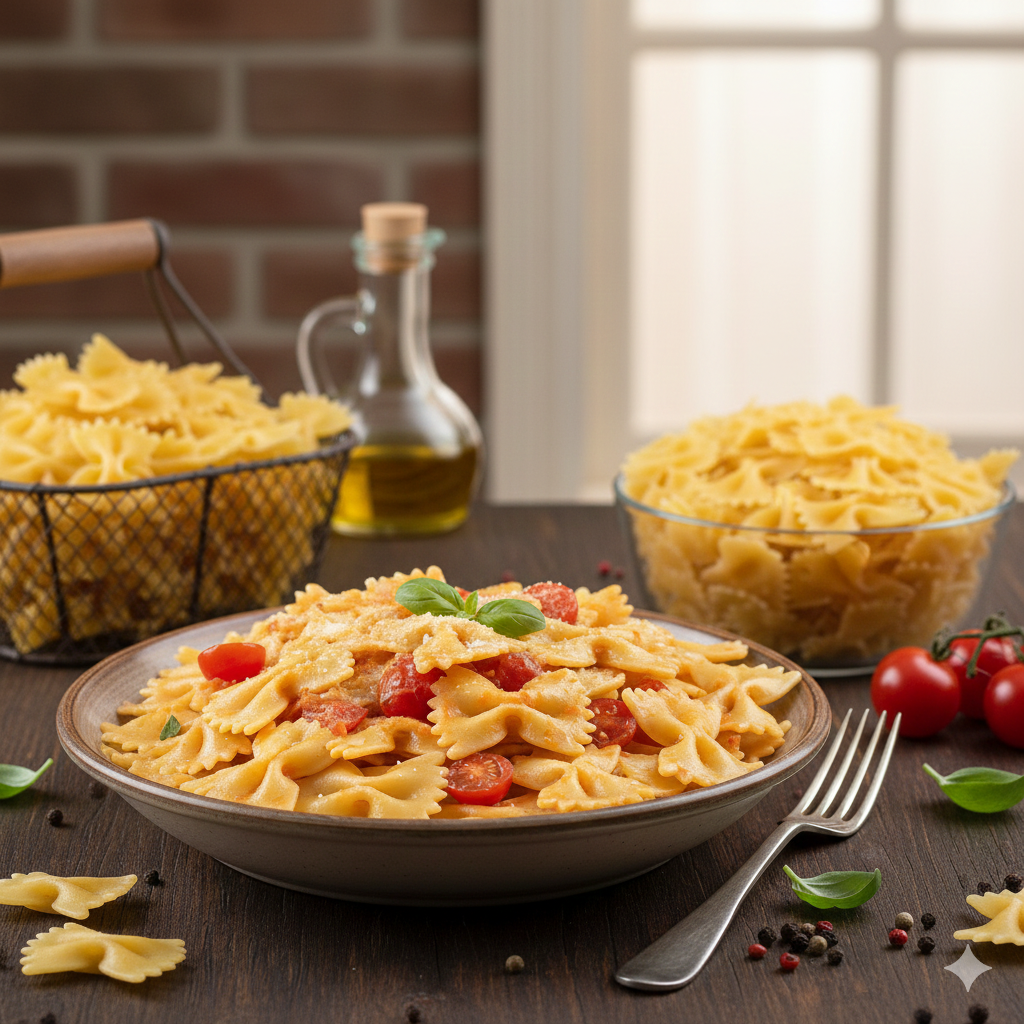
A pasta-shaped spotlight exploring why Farfalle holds sauces so well, tastes familiar, and continues to show up in beloved dinner combinations around the world.pasta-shaped
🍝 Skillet & Bake Pasta Inspirations Worth Saving
Comfort meal cooks love pasta that delivers flavor without frustration. Farfalle’s unique shape — often compared to butterflies or tiny bows — gives every bite more sauce surface, more texture, and more satisfaction. Instead of slipping under heavy broth or watery sauce, this pasta embraces every creamy, buttery, and slow-simmered tomato glaze with effortless cling and balance.
The Sauce-Cling Magic of Farfalle
Farfalle Pasta remains a popular pasta choice because it solves one of the biggest dinner-time texture problems many readers complain about: sauces that slide off noodles or pool like broth. The folds and edges of Farfalle act like a natural sauce trap, grabbing creamy dairy coatings and slow-simmered tomato ragu blends without losing structure or bite personality.
Its surface holds melted cheese better because the cheese bonds to starch-reduced liquids, not water pools. Eaters enjoy how Farfalle distributes flavor evenly because each noodle carries both sauce and seasoning instead of needing to dig around for taste. That dependable coating behavior is why it keeps resurfacing in pasta dinners, weekday meals, pot-simmer casseroles, and sauce-education content alike.
Another reason it’s recognizable and comforting for a wider audience is its close association with famous pasta makers which often appears in grocery aisles as one of the most accessible pasta shapes. Although Alfredo, Rosa, and Ragu sauces may evolve with ingredient swaps, readers return to them because the base flavor profiles still lean on familiar aromatics like garlic, onion, tomato, butter, and Parmesan — all mild, reliable, and well-recognized.
Farfalle works exceptionally well for creamy coats because its folds hold the sauce visually and texturally, not just in taste. The deeper, darker ragu bases photograph beautifully when simmered low, creating glossy red sauce without looking like soup — a visual many kitchen enthusiast naturally associate with quality pasta without needing heavy labels.
Farfalle Sauce Styles Kitchen Makers Recognize
- Butter-based garlic cream reductions
- Tomato paste slow-simmer foundation ragu
- Basil-cream or vegetable-herb dairy fusion
- 3-cheese gloss melts
- Light protein-bites folded (chicken, cod, shrimp, turkey, mushrooms if browned first)
Why It Still Shows Up Often
Some foods trend temporarily, but sauces that reduce into thick coatings continue to be familiar cooks favorites. Farfalle remains part of dinner rotations because the pasta shape is adaptable to both creamy skillet-style meals and lightly layered casserole bakes. The flavor experience is balanced and approachable, making it repeatable across a wide audience.
❄ Storage & Reheat
Let pasta cool completely before sealing in airtight bowls or containers. It stores safely:
- refrigerator: up to 3 days
- freezer: 4–6 weeks
When reheating, warm on low to medium heat. Add only a small splash of broth or pasta water if needed to restore creamy texture. Avoid boiling harshly after cheese is incorporated. This keeps the dish glossy and coated rather than watery or broth-heavy underneath.
Top Ways Farfalle Is Used in Kitchen-Favorite Pasta Dishes
Farfalle thrives in dishes that prioritize sauce cling, flavorful reduction, and smooth cheese melts. Many kitchen meal makers love it for:
- skillet creamy coatings that stay thick and glossy without feeling brothy
- short-bake pasta bakes topped lightly with cheese crowns
- vegetable-fold sauces using spinach, pumpkin, or artichokes
- white-fish or protein bites stirred into the butter-sauce foundation
- mid-week family dinners that need dependable noodle coating
- no-dig pasta formatting that gives instant satisfaction
This pasta works beautifully for both quick 20-minute sauces and 1-hour slow-reduced ragu because its shape creates a sauce-carrying bite every time. The appeal lies in the sauce behavior and noodle joy, not the complexity.
❓ FAQs:
Q: Can Farfalle Pasta be swapped for other pasta shapes?
A: Yes, pasta shapes with similar folds or ridges — such as Rotini or Cavatappi — can work well with thick, creamy or tomato-based sauces because they also help carry flavor evenly.
Q: Why does Farfalle sometimes look oily or separated?
A: This can happen if liquids weren’t simmered thick before cheese was added, or if cheese was folded into the sauce too fast. Slower, gentle heat helps the cheese melt smoothly and keeps the pasta thick-coated instead of soupy.
Q: Does Farfalle overcook easily in creamy bakes?
A: Not if the sauce is reduced first and the bake time stays short.
Want More Cozy Dinner Ideas?
If you loved this recipe, you’ll love my free Comfort Dinner Guide—packed with easy, satisfying weeknight meals.